Choosing a Thin Glass Substrate
D263, BK7 or Fused Silica, and How to Read Ra, TTV and Thickness Specs
For sensors, optical components and research work, the substrate is often the first decision and the easiest place to overspend. This guide compares three common thin glasses and shows how to write your specs so you get a quote that does the job without unnecessary processing.
A typical request reads: "I need a very flat, very smooth piece of thin glass." The trouble is that "flat" can mean uniform thickness (TTV), no bending across the part (bow/warp), or surface roughness (Ra). And "smooth" on which side, to how many nanometers, can change the price several times over.
Below we compare D263, BK7 and fused silica, explain what each spec means, and list a few common ways to keep costs down.
Three MaterialsHow D263, BK7 and Fused Silica Differ
| Item | D263 (thin borosilicate) | BK7 (optical glass) | Fused silica |
|---|---|---|---|
| Refractive index nd | approx. 1.523 | approx. 1.517 | approx. 1.458 |
| Thermal expansion | approx. 7.2 ppm/K (20–300 °C) | approx. 7.1 ppm/K (−30–70 °C) | approx. 0.55 ppm/K |
| Manufacturing | Down-drawn directly into thin sheets | Cut, ground and polished from blocks | Cut, ground and polished from blocks |
| As-supplied surface | Very smooth as drawn, often no extra polishing needed | Requires grinding and polishing | Requires grinding and polishing |
| Main strengths | Thin, smooth, usually cost-effective | Good optical homogeneity, well documented | UV transmission, heat resistance, very low expansion |
| Typical uses | Cover slips, sensor chips, substrates for thin-film coating | Visible to near-IR windows, filter substrates | UV optics, high-temperature processes, laser and semiconductor equipment |
Values are representative figures from manufacturers' published data. Thermal expansion is quoted over different temperature ranges and is for material comparison only; use the certificate for your actual batch when designing.
D263: Start Here When You Need Thin and Smooth
D263 is a borosilicate glass down-drawn directly into thin sheets, with standard thicknesses from 0.03 mm to 1.1 mm. Because the surface forms naturally during drawing, the as-drawn sheet is already very smooth, with typical roughness around 1 nm in the manufacturer's data (a typical value, not a guaranteed one). Many applications that only need one smooth side can use the as-drawn sheet without extra polishing.
BK7: The Standard Choice for Visible Optics
BK7 is the most widely used optical glass, with uniform refractive index, complete data and transmission from about 350 nm to 2.5 μm. It is cut and polished from blocks, so surface quality can be excellent, but the thinner the part, the harder the grinding, the higher the breakage risk and the higher the price.
Fused Silica: UV, High Temperature and Low Expansion
Fused silica, often called quartz glass, has a thermal expansion coefficient roughly one tenth that of ordinary glass, so its dimensions barely change with temperature. UV grades such as JGS1 still transmit well in the deep UV. It suits UV optics, high-temperature processes and applications that demand dimensional stability. The trade-off is higher material and processing cost.
Reading the SpecsWhat Ra, TTV, Bow/Warp and Thickness Tolerance Mean
| Spec | Meaning | How to set it sensibly |
|---|---|---|
| Ra (surface roughness) | Average height of microscopic surface irregularities, in nm | Specify it only for the functional side; the other side can be standard |
| TTV (total thickness variation) | Difference between the thickest and thinnest point of one part | Tight only if the whole part is used; can be relaxed if you dice it into small pieces |
| Bow / Warp | How much the whole part bends or twists | Matters for wafer processing, bonding or vacuum chucking |
| Thickness tolerance | Allowed difference between actual and nominal thickness | Set by assembly or optical path needs, e.g. ±0.015 mm |
| S/D (scratch/dig) | Surface defect grade, e.g. 40-20, 20-10 | Lower numbers are stricter and cost more; 40-20 is common for commercial optics |
Four Common Ways to Over-Specify
- Top grade on both sides: most applications have only one functional side. Specifying the other side as standard cuts processing cost considerably.
- Extra polishing when the as-drawn sheet is enough: D263 is already very smooth as drawn. Sample and measure the as-drawn sheet first, then discuss polishing only if needed.
- Full-wafer TTV for parts you will dice: if you only use a 15 × 15 mm area, a 4-inch full-wafer TTV spec adds cost you never use.
- Volume from day one: start with a small sample batch, confirm the measurements, then set the production spec, so a whole lot is not built to the wrong spec.
Coating Afterwards? Plan It Together
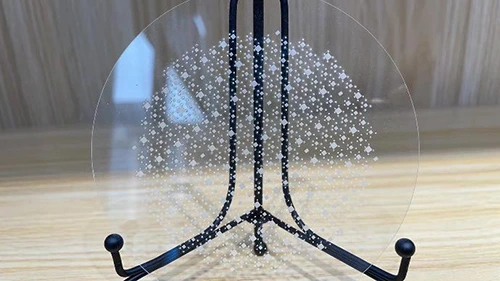
If the substrate will later get a metal film, an anti-reflection coating or photolithographic patterns, plan it when you choose the substrate: the roughness required on the coated side, whether to coat before or after dicing, and who supplies the substrate all affect yield and total cost.
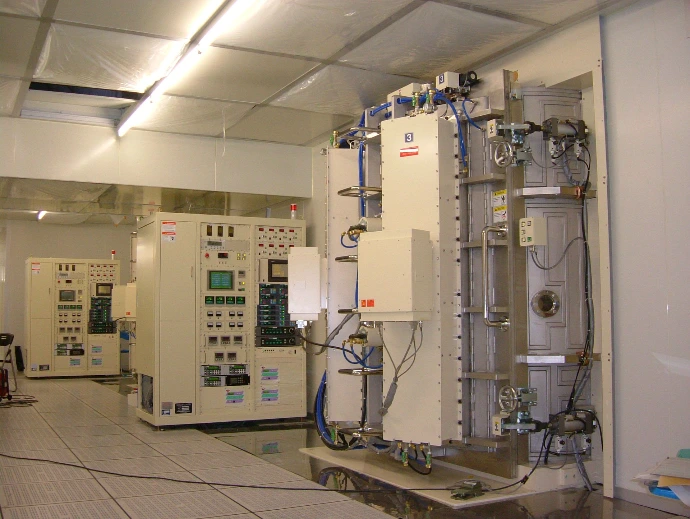
We supply glass wafers and precision optical glass processing and also handle optical coating and photolithography, so substrate and coating can be evaluated together.
Before You Ask for a QuoteWhat to Include in Your Inquiry
| Item | Details |
|---|---|
| Material | D263, BK7, fused silica or other; if unsure, describe the application |
| Size and thickness | Diameter or length × width, thickness and tolerance, flat or notch needed |
| Surface | Which side needs what Ra, and the S/D grade |
| Flatness | Whether TTV or bow/warp is required, and whether parts will be diced |
| Downstream processes | Coating, photolithography or bonding, and who supplies the substrate |
| Quantity | Sample quantity and estimated production volume |
Frequently Asked Questions
What is the difference between D263 and BK7?
When should I choose fused silica?
Do both sides need an Ra requirement?
If the parts will be diced into small pieces, do I still need a TTV spec?
Can I order a small number of samples first?
Not Sure Which Glass to Choose?
Tell us your application and your current spec ideas. We will reply within one business day with a material recommendation and a quote.
Choosing a Thin Glass Substrate
D263, BK7 or Fused Silica, and How to Read Ra, TTV and Thickness Specs
For sensors, optical components and research work, the substrate is often the first decision and the easiest place to overspend. This guide compares three common thin glasses and shows how to write your specs so you get a quote that does the job without unnecessary processing.
A typical request reads: "I need a very flat, very smooth piece of thin glass." The trouble is that "flat" can mean uniform thickness (TTV), no bending across the part (bow/warp), or surface roughness (Ra). And "smooth" on which side, to how many nanometers, can change the price several times over.
Below we compare D263, BK7 and fused silica, explain what each spec means, and list a few common ways to keep costs down.
Three MaterialsHow D263, BK7 and Fused Silica Differ
| Item | D263 (thin borosilicate) | BK7 (optical glass) | Fused silica |
|---|---|---|---|
| Refractive index nd | approx. 1.523 | approx. 1.517 | approx. 1.458 |
| Thermal expansion | approx. 7.2 ppm/K (20–300 °C) | approx. 7.1 ppm/K (−30–70 °C) | approx. 0.55 ppm/K |
| Manufacturing | Down-drawn directly into thin sheets | Cut, ground and polished from blocks | Cut, ground and polished from blocks |
| As-supplied surface | Very smooth as drawn, often no extra polishing needed | Requires grinding and polishing | Requires grinding and polishing |
| Main strengths | Thin, smooth, usually cost-effective | Good optical homogeneity, well documented | UV transmission, heat resistance, very low expansion |
| Typical uses | Cover slips, sensor chips, substrates for thin-film coating | Visible to near-IR windows, filter substrates | UV optics, high-temperature processes, laser and semiconductor equipment |
Values are representative figures from manufacturers' published data. Thermal expansion is quoted over different temperature ranges and is for material comparison only; use the certificate for your actual batch when designing.
D263: Start Here When You Need Thin and Smooth
D263 is a borosilicate glass down-drawn directly into thin sheets, with standard thicknesses from 0.03 mm to 1.1 mm. Because the surface forms naturally during drawing, the as-drawn sheet is already very smooth, with typical roughness around 1 nm in the manufacturer's data (a typical value, not a guaranteed one). Many applications that only need one smooth side can use the as-drawn sheet without extra polishing.
BK7: The Standard Choice for Visible Optics
BK7 is the most widely used optical glass, with uniform refractive index, complete data and transmission from about 350 nm to 2.5 μm. It is cut and polished from blocks, so surface quality can be excellent, but the thinner the part, the harder the grinding, the higher the breakage risk and the higher the price.
Fused Silica: UV, High Temperature and Low Expansion
Fused silica, often called quartz glass, has a thermal expansion coefficient roughly one tenth that of ordinary glass, so its dimensions barely change with temperature. UV grades such as JGS1 still transmit well in the deep UV. It suits UV optics, high-temperature processes and applications that demand dimensional stability. The trade-off is higher material and processing cost.
Reading the SpecsWhat Ra, TTV, Bow/Warp and Thickness Tolerance Mean
| Spec | Meaning | How to set it sensibly |
|---|---|---|
| Ra (surface roughness) | Average height of microscopic surface irregularities, in nm | Specify it only for the functional side; the other side can be standard |
| TTV (total thickness variation) | Difference between the thickest and thinnest point of one part | Tight only if the whole part is used; can be relaxed if you dice it into small pieces |
| Bow / Warp | How much the whole part bends or twists | Matters for wafer processing, bonding or vacuum chucking |
| Thickness tolerance | Allowed difference between actual and nominal thickness | Set by assembly or optical path needs, e.g. ±0.015 mm |
| S/D (scratch/dig) | Surface defect grade, e.g. 40-20, 20-10 | Lower numbers are stricter and cost more; 40-20 is common for commercial optics |
Four Common Ways to Over-Specify
- Top grade on both sides: most applications have only one functional side. Specifying the other side as standard cuts processing cost considerably.
- Extra polishing when the as-drawn sheet is enough: D263 is already very smooth as drawn. Sample and measure the as-drawn sheet first, then discuss polishing only if needed.
- Full-wafer TTV for parts you will dice: if you only use a 15 × 15 mm area, a 4-inch full-wafer TTV spec adds cost you never use.
- Volume from day one: start with a small sample batch, confirm the measurements, then set the production spec, so a whole lot is not built to the wrong spec.
Coating Afterwards? Plan It Together
If the substrate will later get a metal film, an anti-reflection coating or photolithographic patterns, plan it when you choose the substrate: the roughness required on the coated side, whether to coat before or after dicing, and who supplies the substrate all affect yield and total cost.
We supply glass wafers and precision optical glass processing and also handle optical coating and photolithography, so substrate and coating can be evaluated together.
Before You Ask for a QuoteWhat to Include in Your Inquiry
| Item | Details |
|---|---|
| Material | D263, BK7, fused silica or other; if unsure, describe the application |
| Size and thickness | Diameter or length × width, thickness and tolerance, flat or notch needed |
| Surface | Which side needs what Ra, and the S/D grade |
| Flatness | Whether TTV or bow/warp is required, and whether parts will be diced |
| Downstream processes | Coating, photolithography or bonding, and who supplies the substrate |
| Quantity | Sample quantity and estimated production volume |
Frequently Asked Questions
What is the difference between D263 and BK7?
When should I choose fused silica?
Do both sides need an Ra requirement?
If the parts will be diced into small pieces, do I still need a TTV spec?
Can I order a small number of samples first?
Not Sure Which Glass to Choose?
Tell us your application and your current spec ideas. We will reply within one business day with a material recommendation and a quote.